
Product range
Pain management
Technique using single wound infiltration with local anaesthetic or continuous local anaesthetic infusion through catheters placed into the surgical wound (continuous wound infiltration, CWI) is increasing and is today parts of multimodal analgesia schemes for postoperative pain.
The benefits of local anaesthetics in post surgical pain management
Post surgical pain management by the use of local anaesthetics is a recently introduced technique for improving the patient recovery process after a major surgical procedure. According to several studies, CWI offers several benefits including improved analgesia, reduced opioid use, reduced side effects, increased patient satisfaction, and reduced length of hospital stay. Placing the CIMPAX C-CAT catheter offers the possibility of introducing local anaesthetics directly into the surgical wound area post surgically. Offering concentrated pain relief, exactly where the pain is generated. Using local anaesthetics for post surgical pain relief greatly reduces the use of narcotics. Side effect as nausea and vomiting are therefore reduced.
We manufacture and supply CIMPAX Wound Infiltration Catheter Kit for pre-, peri- and postoperative pain management.
CIMPAX C-CAT Continuous Wound Infiltration System
The CIMPAX C-CAT wound infiltration kit is developed and manufactured by CIMPAX and offers a complete kit for effective pain management. The kit can offer delivery of local anaesthetics to or around surgical wound sites for preoperative, perioperative, and postoperative pain management.
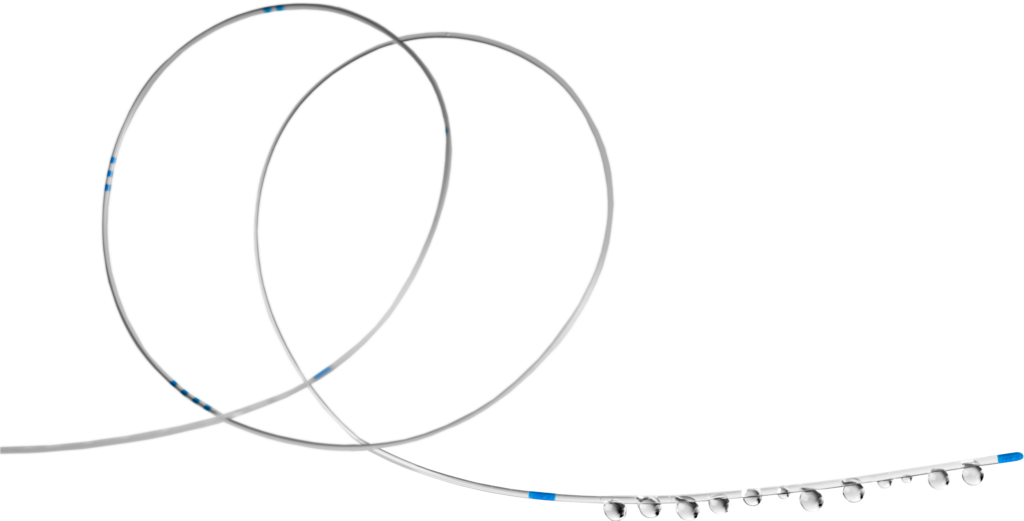
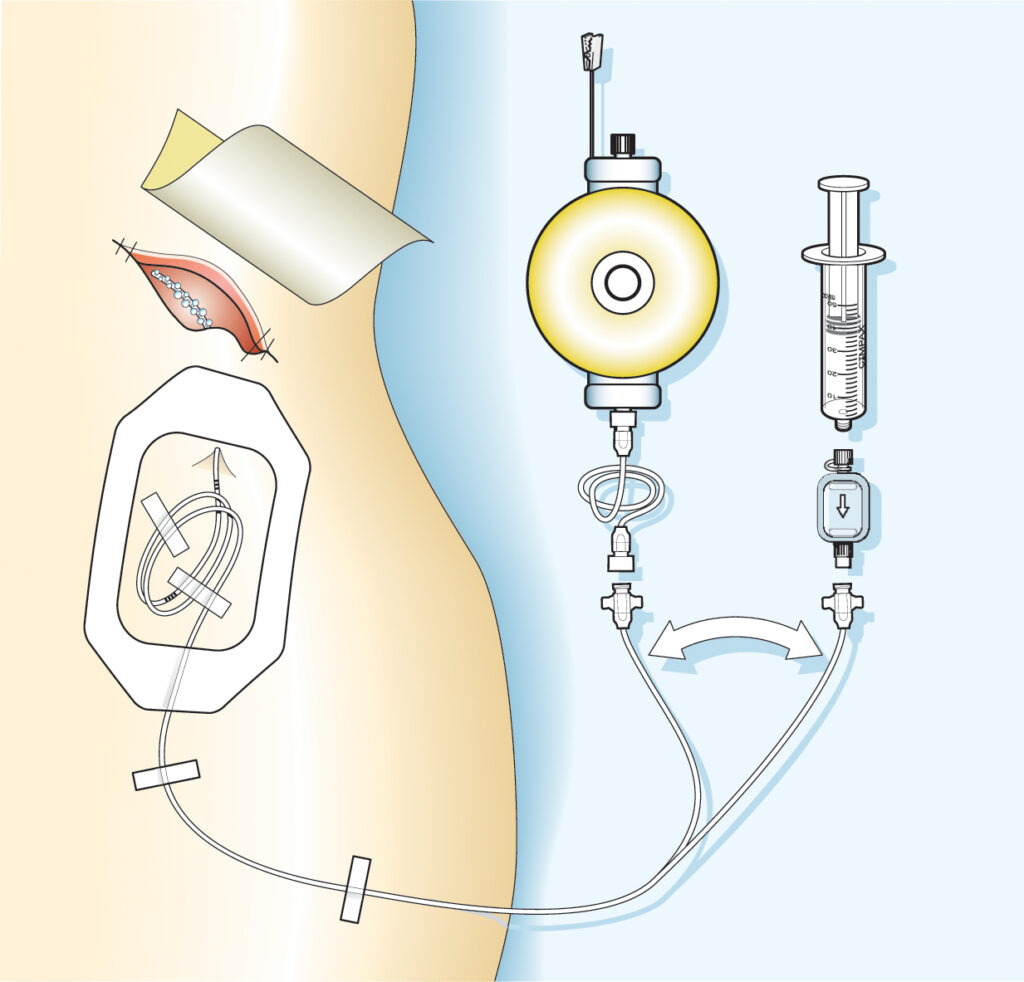
The kit is a sterile, single use, closed tip, multi-perforated catheter with a specified fenestrated length that incorporates micro-holes placed in a spiral pattern to provide 360° drug distribution. The kit contains needle for infiltration of the surgical site during the procedure and can be used with infusion pumps as well as for bolus injections providing even administration of local anaesthetics to the surgical site postoperatively. Also, the CIMPAX C-CAT wound infiltration catheter kit contains anaesthesia catheter, antibacterial filter, 2ml priming syringe, OTN peel introducer w/sheath, PU dressing, and strips.
Furthermore, the CIMPAX C-CAT catheter is available in 5 different lengths with either luer lock or NRFit connection (ref. ISO 80369-6).
FEATURES AND BENEFITS
-
User-friendly and reliable
Simple and safe placement -
Larger perforated holes
Enhanced flow of anaesthetics -
High anti-kinkage capabilities
Ensures stabile anaesthetic flow -
No metal material
Sustainability -
High burst strength
Durable and safe removal
-
Overmoulded connector
Leakage and rupture free -
Same thickness on catheter and needle
Reduced backflow or oozing from incision point -
Smooth surface
Minimizes risk of microbial film buildup -
Also available with NRfit
Increased safety (prevents neuraxial misconnections - ref. ISO 80369)